Why We Chose It
The Bonham Conclusion
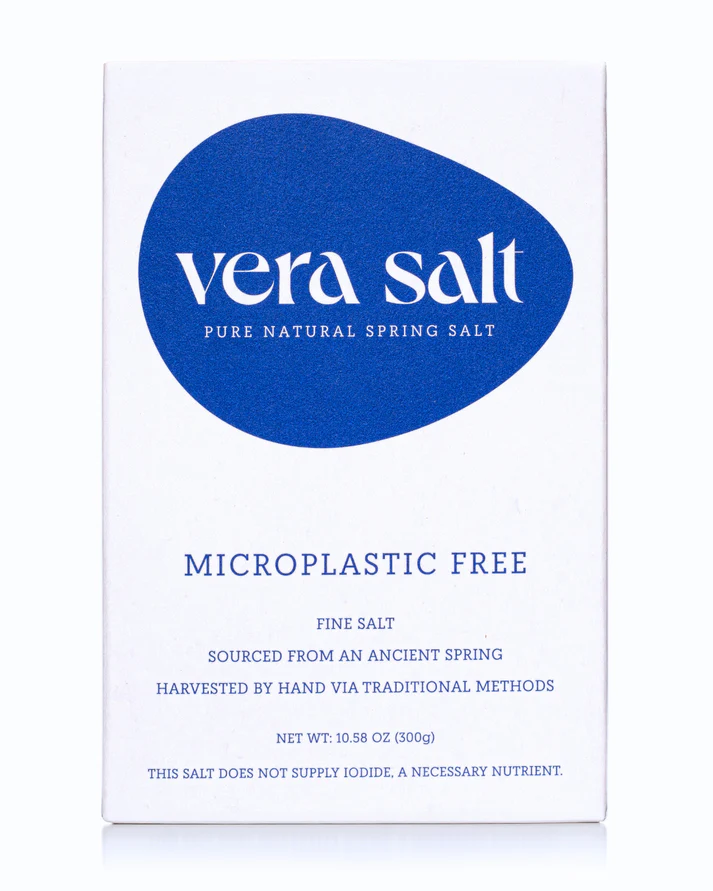
We chose Vera Salt because it is the only salt we found that combines three non-negotiable qualities: a naturally protected source that eliminates the primary contamination pathways affecting every other salt category, a completely unprocessed harvest method that introduces no machinery, no chemicals, and no industrial inputs of any kind, and a level of testing transparency that is simply without parallel in the consumer salt market.
Vera Salt publishes independent third-party lab results for every single batch — not an annual summary, not a representative sample — every batch, tested for heavy metals and microplastics by accredited independent laboratories, with results posted publicly on their website going back multiple years. We reviewed those results directly. They are among the best published figures for any unrefined salt available anywhere.
That combination — protected source, zero processing inputs, and batch-level published testing — is what earned Vera Salt a place in our home and a Bonham Gold Label.
Who They Are
Vera Salt — What Makes Them Different
Vera Salt sources their Fine Spring Salt from an ancient underground spring in the foothills of Spain at over 2,000 feet above sea level. The spring feeds from a deep underground aquifer — naturally isolated from ocean pollution, industrial runoff, surface contamination, and human activity. The geographic elevation and inland location are not marketing language. They represent a fundamentally different contamination risk profile compared to ocean-harvested or surface-mined salts.
The harvest method is equally important. Vera Salt is hand-harvested using traditional methods — no excavators, no conveyors, no mechanical processing equipment, no industrial machinery of any kind touches the salt from spring to package. This is the same method used for centuries before industrial salt production existed. It is slower, more expensive, and it is the only way to guarantee that the contamination pathways introduced by heavy machinery are entirely absent.
What Vera Salt does not do is as important as what they do. There is no bleaching. No washing. No anti-caking agents. No flow agents. No additives of any kind. Natural clumping may occur — and that is actually evidence of a clean product, not a defect. A salt that never clumps has been chemically treated to prevent it.
On transparency: Vera Salt publishes their complete lab results — including the names of the testing laboratories, the methodologies used, and historical batch results going back multiple years — at verasalt.co/pages/lab-testing. Testing has been conducted by AGQ Labs USA using ICP-MS methodology, by Light Labs using ICP-MS/MS to ISO 17025 standards, and by EMSL Analytical for microplastics using PLM, RLM, and FTIR per ISO 24187:2023. These are accredited, independent laboratories with no financial relationship to Vera Salt. This is the gold standard for transparency in consumer food products.
Claims & Certifications
What Vera Salt Claims — And What Each One Means
Independent Research & Lab Testing
What Outside Investigators Found
Vera Salt's published lab results are available directly at verasalt.co/pages/lab-testing. Results across multiple years of batch testing show non-detect or extremely low levels for aluminum, arsenic, cadmium, lead, and mercury, with microplastics confirmed absent by FTIR testing. These results are consistent across labs and across years — not an isolated favorable result.
Mamavation, one of the most widely cited independent consumer health investigators in the United States, has conducted EPA-certified laboratory testing on over 40 salt brands as of May 2026. Their investigation found detectable heavy metals in all tested salts, but confirmed that none reached levels requiring a California Proposition 65 warning at typical serving sizes in the original 23-brand study. Vera Salt has been included in Mamavation's expanded investigation. Their full findings are available at mamavation.com — Sea Salt & Himalayan Salt Tested For Heavy Metals, with detailed brand-by-brand results for newer additions available through Mamavation Insider membership.
Ruan Living independently reviewed third-party lab data across multiple salt brands and specifically named Vera Salt as a spring-sourced option confirmed microplastic-free by third-party testing, identifying it as a recommended option for consumers concerned about both microplastics and heavy metals. Their full analysis is at Ruan Living — Heavy Metals in Salt: Third-Party Tested Options.
ImPlasticFree.com independently evaluated multiple salt brands and confirmed Vera Salt's microplastic-free status through their own review of the published lab reports, noting the spring-source and plastic-free packaging as distinguishing factors. Their evaluation is at implasticfree.com — Microplastic Free Salt Brands.
We review published lab results and independent investigator findings. We are not a laboratory and do not conduct our own testing. All primary sources are linked above for your own review.
The Broader Picture
Why Most Salts — Including the "Natural" Ones — Did Not Make the Cut
Ocean-harvested sea salts are exposed to the full breadth of modern ocean pollution. Microplastics have been found in sea salts from virtually every region of the world tested. A 2018 study published in Environmental Science and Technology found microplastics in 90% of global sea salt brands tested. A 2023 study testing multiple salt types found that ocean-sourced salts continue to carry measurable microplastic loads. Independent testing by Mamavation and Lead Safe Mama, using EPA-certified laboratories, found detectable heavy metals in 100% of salt products tested, with levels varying widely by brand and source. Full Mamavation findings at mamavation.com.
Mined salts — including Himalayan pink salt — carry contamination risks that are less commonly discussed. Mining operations use heavy machinery including excavators, drills, conveyors, and transport equipment. The metals composing this machinery — chromium, lead, nickel, and others — can leach into salt during extraction and transportation. Where explosive charges are used, chemical residues from those explosives, which may contain heavy metal compounds, can contaminate the surrounding deposit. According to a comparative salt analysis by Crucial FOUR, heavy machinery and explosives in mining operations can unearth and distribute heavy metals naturally present in geological layers, mixing them into extracted salt. A 2023 study testing multiple salt types found Himalayan pink salt had among the highest microplastic loads of any tested category.
Conventional iodized table salt is bleached to achieve a consistent white appearance, stripped of naturally occurring trace minerals during processing, and then treated with anti-caking agents — commonly sodium ferrocyanide or aluminum silicate — before packaging. It is among the most processed foods in any kitchen. A detailed breakdown of contamination sources across all major salt types is available at Ruan Living — Heavy Metals in Salt.
"Source environment, processing method, and manufacturer testing transparency matter more than salt type alone in determining how clean a specific product is."
Source: Ruan Living — Heavy Metals in Salt: Third-Party Tested Options for Safe Consumption, February 2025, updated May 2026.