Why We Chose It
The Bonham Conclusion
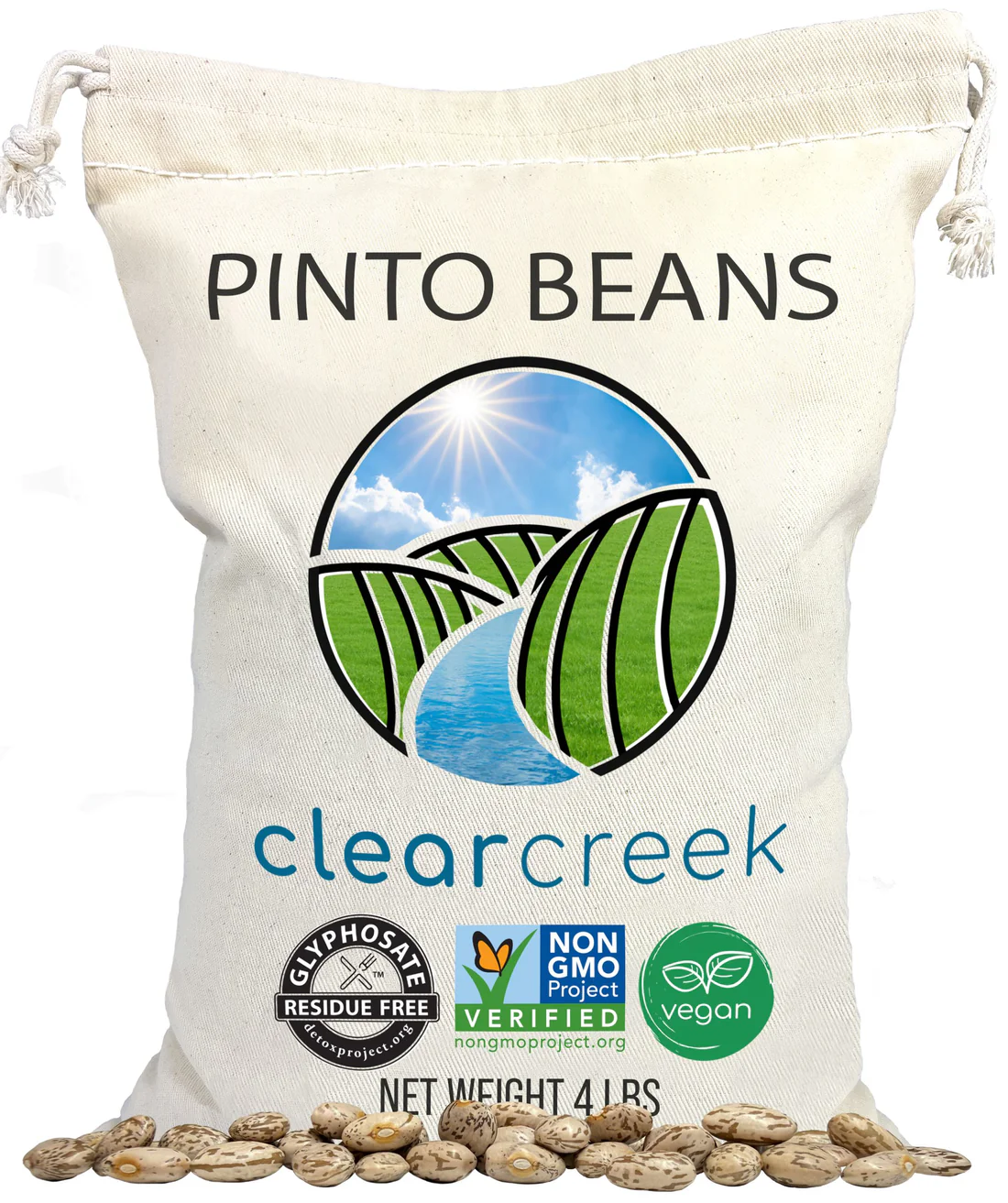
We chose Clear Creek Pinto Beans by Palouse Brand because they offer something rare in the dried bean category — complete farm-to-consumer traceability combined with Glyphosate Residue Free certification from The Detox Project.
Clear Creek is grown on a 125-year-old family farm in Washington's Palouse region — some of the most fertile dryland farming soil in North America. The beans are Non-GMO, non-irradiated, desiccant-free, and triple-cleaned in an FDA-approved HACCP-certified facility. Field location, harvest dates, and photos are provided to customers. This is as direct and transparent a supply chain as a dried bean product can have.
For a product as simple as a dried pinto bean, the Glyphosate Residue Free certification by The Detox Project is the most important quality marker available — because most conventional beans are sprayed directly with glyphosate as a pre-harvest desiccant in the days before harvest.
Who They Are
Palouse Brand and Clear Creek — 125 Years on the Same Land
Palouse Brand is a 6th generation family farm based in Eastern Washington — a vertically integrated operation that grows, harvests, triple-cleans, processes, packages, and ships directly to customers. They are not a brand that sources from third parties. They grow what they sell, on the same land their family has farmed for over a century.
Clear Creek is Palouse Brand's premium product line. The pinto beans are grown in the Palouse region — a stretch of rolling hills in eastern Washington and northern Idaho known for producing some of the cleanest dry-farmed legumes and grains in the United States. The Pacific Northwest's dryland farming history does not carry the arsenic-contaminated soil legacy that affects southern US growing regions from decades of cotton farming pesticide use.
On traceability: Palouse Brand provides customers with field location, harvest dates, and photos for their products. The beans are triple-cleaned in an FDA-approved, food-safe, HACCP-certified facility before packaging. This level of supply chain transparency is genuinely uncommon in the dried bean category.
Claims & Certifications
What Clear Creek Claims — And What Each One Means
Independent Research & Lab Testing
What Outside Investigators Found
The Detox Project Certification: Clear Creek Pinto Beans are explicitly listed as Certified Glyphosate Residue Free on The Detox Project's public database — independently lab-tested with non-detect results for glyphosate and AMPA. Publicly verifiable at detoxproject.org — Certified Products.
Mamavation Legumes Investigation: Mamavation's investigation of glyphosate in legumes categorizes products holding Detox Project Glyphosate Residue Free certification in their Best category. Full investigation at mamavation.com — Legumes Investigation.
Honest transparency note: No independent heavy metals testing is publicly available for Clear Creek Pinto Beans specifically. Pacific Northwest dryland farming soils are generally considered low-risk for heavy metal contamination, but no published testing confirms this for this specific product. Glyphosate certification only — not a broader chemical panel.
We review published certifications and independent investigator findings. We are not a laboratory and do not conduct our own testing. All primary sources are linked above for your own review.
The Broader Picture
Why Glyphosate in Beans Is a Bigger Problem Than You Think
Conventional bean farming uses glyphosate not just as a weed killer during the growing season — it uses it as a harvest tool. Approximately 7 to 14 days before harvest, farmers spray glyphosate directly on the standing bean crop to kill the plants uniformly, accelerating drying and making mechanical harvesting faster. The result is that glyphosate is applied at near-maximum concentration directly to the food product in the final days before it is harvested and sold.
This is not a residue from early-season soil treatment. This is the active ingredient in Roundup applied directly to the bean you are eating. Independent testing by The Detox Project and Mamavation has confirmed detectable glyphosate in a significant proportion of conventional dried beans sold in the United States.
Glyphosate Residue Free certification from The Detox Project independently verifies this is not present in Clear Creek beans at the lowest government-recognized detection limits.
"Glyphosate is commonly applied directly to bean crops 7 to 14 days before harvest as a desiccant. The only reliable way to avoid it is to choose beans that are certified Glyphosate Residue Free by an independent testing program."