Why We Chose It
The Bonham Conclusion
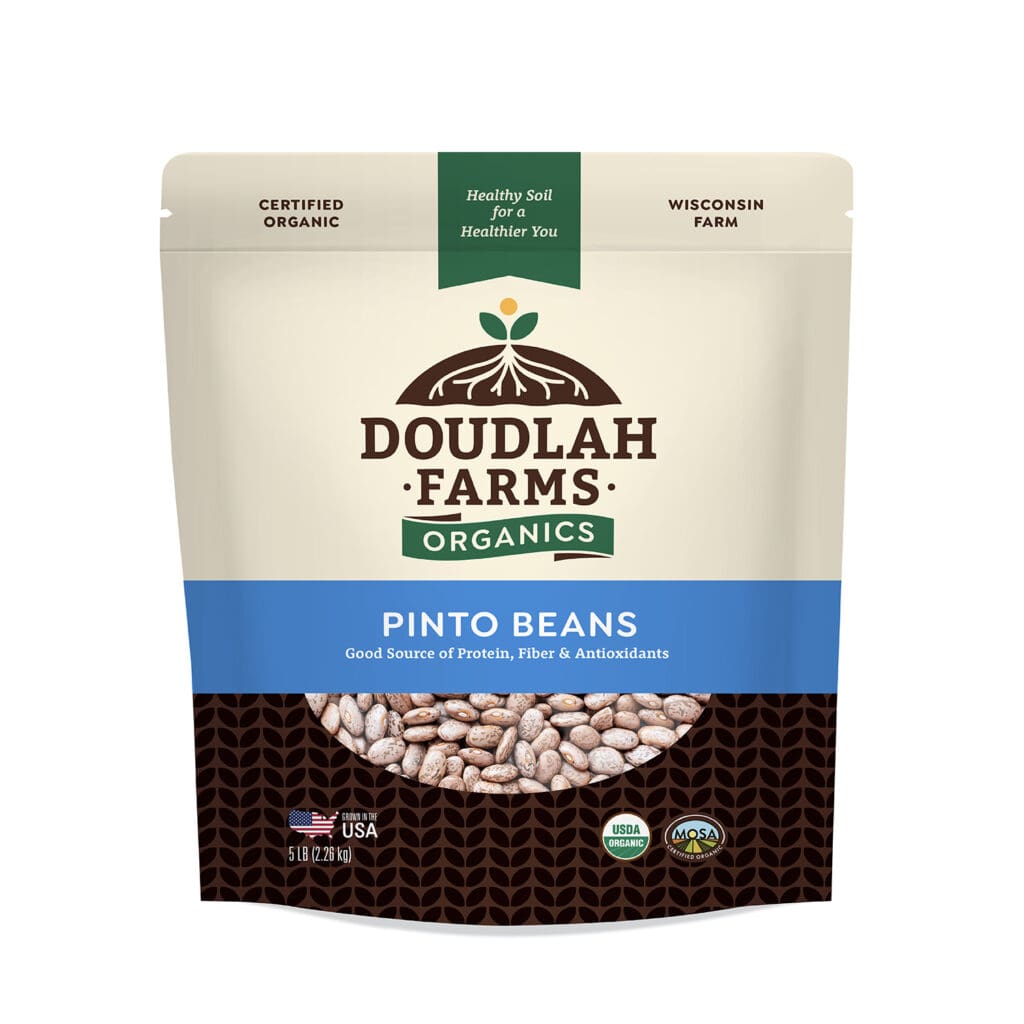
We chose Doudlah Farms Organic Pinto Beans because they represent the highest standard of independent chemical verification available for a dried bean product — and because the farming practices behind them are among the most rigorous we have found anywhere.
Doudlah Farms holds the Tested Clean certification from testedclean.org — an independent program that certifies their soil and crops are free from over 220 toxic pesticides and chemicals including glyphosate and AMPA. Unlike most certifications which test once and issue a certificate, Tested Clean requires continuous testing, blind spot-checks pulled directly from retail shelves, and laboratory sensitivity levels 10 to 100 times greater than most US labs. The benchmark is less than 10 nanograms per gram for all pesticides and chemicals combined. Doudlah meets it.
They are also USDA Certified Organic, Regenerative, and Biodynamic — three layers of farming practice certification that together represent the highest agricultural standard available in the United States. For a product as simple as a dried bean, this combination is exceptional.
Who They Are
Doudlah Farms — A Legacy Built on Loss
Doudlah Farms is a 6th generation family farm in Evansville, Wisconsin. Their father Earl Doudlah died from Mantle Cell Lymphoma — a cancer linked to agricultural chemical exposure known as Midwest Farmer's Cancer. That loss is the foundation of everything Doudlah Farms does. After losing Earl, the family made a decision to transition their conventional farm entirely to organic, regenerative, and biodynamic practices — not as a business strategy, but as a legacy in his honor.
Their farming philosophy is holistic and ecological. Regenerative agriculture goes beyond avoiding synthetic inputs — it actively rebuilds soil health, increases biodiversity, sequesters carbon from the atmosphere, and produces food that is measurably more nutrient-dense than food grown on depleted conventional soils. Biodynamic farming takes this further, treating the farm as a self-sustaining ecosystem.
Their Wisconsin soils are certified by both USDA and MOSA — Midwest Organic Services Association — one of the most respected organic certifiers in the country. The Tested Clean certification adds a layer of independent chemical testing that goes well beyond what USDA Organic requires or verifies.
Claims & Certifications
What Doudlah Farms Claims — And What Each One Means
Independent Research & Lab Testing
What Outside Investigators Found
Tested Clean certification: Doudlah Farms was awarded the Tested Clean certification in March 2025. Full profile publicly available at testedclean.org — Doudlah Farms. Requires continuous independent testing at 10-100x greater sensitivity than most US labs, with blind retail shelf spot-checks, confirming less than 10 nanograms per gram of all 220+ tested chemicals.
Mamavation legumes investigation: Mamavation's investigation of glyphosate in breads, oats, legumes, protein powders, and bars categorizes products with verified glyphosate-free testing as Best. Doudlah's Tested Clean certification meets and exceeds the testing standard used for that category. Full investigation at mamavation.com — Legumes Investigation.
Honest transparency note: Individual heavy metals results by specific metal are not published publicly through the Tested Clean program. The 220-chemical panel covers heavy metals but does not break out individual lead, cadmium, mercury, and arsenic levels by product. This is why Verified scores 4 rather than 5 in our evaluation.
We review published certifications and independent investigator findings. We are not a laboratory and do not conduct our own testing. All primary sources are linked above for your own review.
The Broader Picture
Why Glyphosate in Beans Is a Bigger Problem Than You Think
The reason glyphosate contamination in beans is especially concerning has nothing to do with organic certification status. It has to do with pre-harvest desiccation.
Conventional bean farming uses glyphosate not just as a weed killer during the growing season — it uses it as a harvest tool. Approximately 7 to 14 days before harvest, farmers spray glyphosate directly on the standing bean crop to kill the plants uniformly, accelerating drying and making mechanical harvesting faster. The result is that glyphosate is applied at near-maximum concentration directly to the food product in the final days before it is harvested and sold.
This is not a residue from early-season soil treatment. This is the active ingredient in Roundup applied directly to the bean you are eating. Independent testing by The Detox Project and Mamavation has confirmed detectable glyphosate in a significant proportion of conventional dried beans sold in the United States.
USDA Organic certification prohibits glyphosate use entirely. Tested Clean certification independently verifies this at laboratory sensitivity levels most certifiers never reach.
"Most organic certifications tell you what a farm doesn't use. Tested Clean certification proves what isn't there — at 10 to 100 times greater laboratory sensitivity than most US testing programs."