Why We Chose It
The Bonham Conclusion
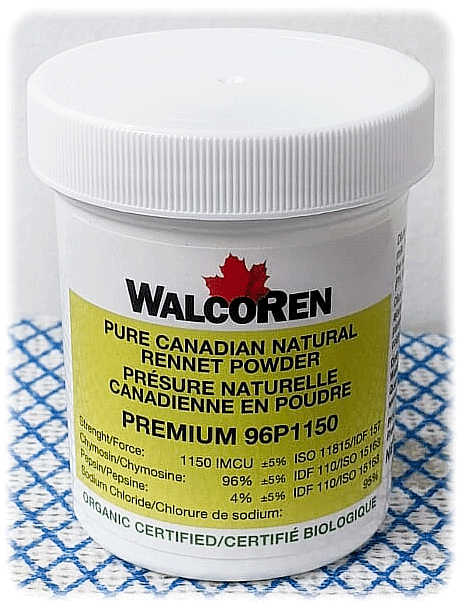
We chose Walcoren Natural Rennet Powder because it is pure natural calf rennet — the most ancient, most traditional, and most unaltered form of rennet available — and because making cheese at home with real natural rennet produces results that are simply not possible with the industrial alternatives. Whether you are making a simple mozzarella, a fresh chèvre, or a long-aged hard cheese, the enzyme you use directly affects the flavor, texture, and integrity of the final product. Walcoren is produced by one of the few remaining manufacturers in the world that has refused to replace traditional methods with industrial shortcuts.
Walcoren guarantees a minimum 97% chymosin content, sourced exclusively from the stomachs of young calves raised on New Zealand pastures where calves are fed only their mother's milk. It is Organic certified and Non-GMO. Every batch is fully traceable.
However we want to be fully transparent about one thing: after researching as thoroughly as we could, we found that Miller's Bio Farm — a reputable organic dairy — contacted Walcoren directly and was told by a company scientist that trace amounts of sodium acetate, propylene glycol, and potassium sorbate are present in the product, but because Walcoren is a Canadian company they are not required to list these on their safety data sheet or label. The publicly listed ingredients are enzyme and salt. The trace additives are not disclosed.
We researched every alternative. No other natural animal rennet powder in the US consumer market combines organic certification, a published 97% chymosin specification, New Zealand sourcing, and traditional production methods. The only comparable manufacturer we found — Italy's Caglificio Clerici, which explicitly states their powder is preservative-free — is not consumer-accessible in the United States. Walcoren remains the best available option. But you deserve to know this, and we scored Verified accordingly.
Who They Are
Walcoren — Traditional Production in a Market That Has Abandoned It
Walcoren is produced by Hundsbichler, a European manufacturer that has been producing natural rennet using traditional methods for generations. Their production philosophy is built around one principle: you cannot improve on nature. Every decision in their process reflects a deliberate rejection of the industrial shortcuts that have come to dominate the rennet market.
Their raw materials are primarily sourced from New Zealand — where unspoiled pastures and calves fed exclusively on their mothers' milk produce what Walcoren considers the highest quality natural rennet available anywhere in the world. These supplier relationships have been maintained for decades.
The production process: raw material is extracted in a solution of table salt and spring water. The natural rennet is then cleaned through several mechanical filtration processes. Critically, Walcoren deliberately does not use vacuum rotation filters — a cheaper industrial method — because that process introduces oxidation that degrades the quality of the final product. The product is dried using traditional manual methods in traditional ovens. This is slower, more expensive, and more labor-intensive than industrial alternatives — and it is the reason the product retains the natural enzyme complexity that makes traditionally made cheese taste different from industrially made cheese.
Batch production only — every batch is monitored continuously and fully traceable. Full product documentation at walcoren.com.
Claims & Certifications
What Walcoren Claims — And What Each One Means
Why Powder
How It Compares to Liquid, Tablet, and Paste
Natural rennet comes in four forms — liquid, tablet, paste, and powder. Each has meaningful differences for home cheesemakers.
Liquid rennet is the easiest to measure and the most popular for home cheesemakers. However it has the shortest shelf life — 6 to 12 months refrigerated — and most liquid rennet products contain preservatives to extend that life. Those preservatives are an additive that powder avoids entirely.
Tablet rennet has the longest shelf life — up to 5 years frozen — making it excellent for occasional cheesemakers. Tablets must be crushed and fully dissolved before use, which can introduce inconsistency in dosing.
Paste rennet is used primarily by artisan producers making traditionally aged Italian cheeses like Pecorino. It contains both chymosin and natural lipase from the stomach lining, contributing specific flavor development in long-aged cheeses. It is not a general-purpose product for home cheesemaking.
Powder rennet sits in the optimal position for the serious home or small-scale cheesemaker. Longer shelf life than liquid — stored in the freezer, Walcoren's powder maintains potency well beyond liquid alternatives. Fewer ingredients than tablets. Easy to measure like liquid but without the preservatives. At Walcoren's 97% chymosin specification, it is the purest natural rennet available in any format. The traditional manual drying process is slower and more expensive than industrial liquid production — but it produces a more stable, concentrated, and purer final product.
For cheeses that require long aging — two years or more — Walcoren's guaranteed 97% chymosin content specifically addresses the consistency problems that can arise with lower-purity rennets during extended maturation. Approximately 1/16 teaspoon sets 2 gallons of milk, making a 35g packet sufficient for 80 to 100 gallons of cheese.
Independent Research & Lab Testing
What We Know — Including What Concerns Us
The trace additive issue: Miller's Bio Farm, a reputable Pennsylvania organic dairy, contacted Walcoren directly while researching rennet for their own cheese production. A Walcoren scientist confirmed that trace amounts of sodium acetate, propylene glycol, and potassium sorbate are present in the rennet, but are not required to be listed on the Canadian company's safety data sheet or product label. The full write-up is at millersbiofarm.com. Propylene glycol is a synthetic compound used as a preservative and humectant. Potassium sorbate is a synthetic preservative. Sodium acetate is a salt used as a preservative and flavoring agent.
Context on exposure: Rennet is used in extremely small quantities — approximately 1/16 teaspoon per 2 gallons of milk. The total mass of rennet per batch of cheese is a fraction of a gram. The trace additive exposure from this quantity is orders of magnitude smaller than exposure from any other food ingredient in the same recipe. We note this not to dismiss the concern but to provide honest context. You now know everything we know.
No better alternative currently accessible: We researched every natural animal rennet powder available to US consumers. Caglificio Clerici — an Italian manufacturer with over 100 years of history — explicitly states their rennet powder is preservative-free and Halal certified. It is not available to US consumers through any accessible retail channel. No other natural rennet powder in the US consumer market matches Walcoren's combination of organic certification, 97% chymosin specification, New Zealand sourcing, and traditional production.
Walcoren's batch documentation: Complete traceability for every batch. Technical documentation specifying minimum 97% chymosin content publicly available at walcoren.com/rennet-powder.
On FPC safety: The FDA approved FPC as substantially equivalent to natural rennet and does not require GMO-origin disclosure on cheese labels. The scientific consensus is that FPC is safe. However the 90-day rat trial that formed the basis of FDA approval is a limited safety evaluation. Long-term independent research on chronic dietary exposure to GMO-derived enzymes in cheese is not extensive. We do not make health claims about FPC. We note that it exists, that most consumers are unaware of it, and that natural rennet is the traditional alternative with thousands of years of documented use.
We review published certifications and available product documentation. We are not a laboratory and do not conduct our own testing.
The Broader Picture
Why 90% of American Cheese Uses a GMO Ingredient Most Consumers Don't Know About
Rennet is traditionally derived from the stomach lining of young ruminant animals — the form used to make cheese for thousands of years and still legally required for Parmigiano Reggiano, Gruyère, and most authentic European PDO cheeses.
In 1990, Pfizer scientists engineered Fermentation-Produced Chymosin — FPC — by splicing the chymosin gene from animal DNA into GMO microorganisms including bacteria, yeast, and mold. These genetically modified microbes are fermented in industrial tanks to produce chymosin at scale without the need for animal-derived rennet. The FDA approved FPC in 1990 as the first genetically engineered food ingredient to receive US regulatory approval.
By 2008, approximately 80 to 90% of commercially made cheese in the United States was produced using FPC. That figure has remained consistent. Pfizer sold its cheese division to Chr. Hansen, which now dominates the global FPC market. The appeal to manufacturers is straightforward — FPC is cheaper, more consistent, and produces slightly higher cheese yields than traditional rennet.
FPC is frequently labeled as "microbial rennet" or "vegetable rennet" on cheese packaging — labels that imply non-GMO origin without disclosing the GMO engineering involved. The FDA does not require disclosure of FPC's GMO origin on cheese labels. Most consumers eating cheese in the United States are consuming a GMO-derived enzyme in every bite without knowing it.
If you make cheese at home, this is entirely in your control. Natural rennet, properly stored, produces results that industrial FPC simply cannot replicate — particularly in long-aged hard cheeses where the natural enzyme complexity of real calf rennet contributes directly to flavor development over time.
"90% of cheese manufactured in the United States uses rennet derived from genetically modified organisms — a fact not disclosed on cheese labels, not required by the FDA, and unknown to most consumers. For home cheesemakers, natural animal rennet is the traditional alternative with thousands of years of documented use."